
History of Unani Medicine: From Greece to India
Introduction to Unani Medicine
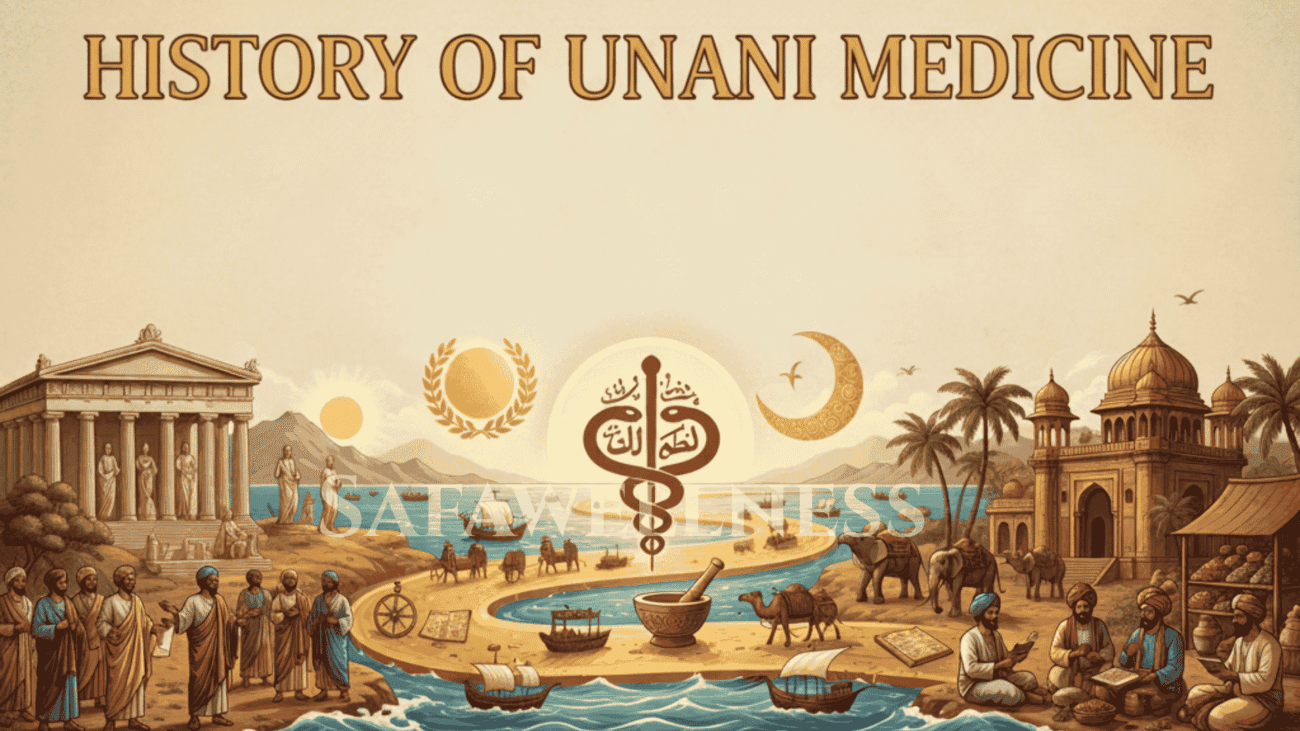
Unani medicine is one of the oldest traditional systems of medicine in the world. It is based on natural principles and focuses on keeping the body balanced and healthy. The word Unani means “Greek,” which shows that this system started in ancient Greece. Over time, Unani medicine traveled through many regions and finally became well established in India.
Today, Unani medicine is recognized as a traditional medical system and is practiced in many countries, especially India. To understand its value, it is important to learn about the history of Unani medicine and how it developed from ancient times to the present day.
Roots of Unani Medicine in Ancient Greece
The origin of Unani medicine can be traced back to ancient Greece, around 2500 years ago. Greek scholars believed that health depends on balance within the body. They observed nature closely and studied how food, climate, and lifestyle affect human health.
Greek doctors focused on natural healing instead of quick treatments. They believed that the body has the power to heal itself if it is supported properly. These ideas became the foundation of the Unani system of medicine.
This early Greek knowledge later traveled to other regions and formed the base of what we now call Unani medicine.
Role of Hippocrates: Father of Medicine
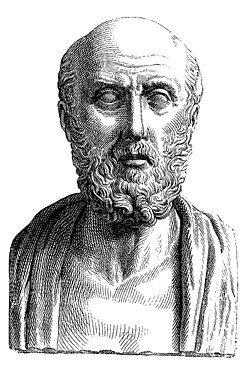
Hippocrates laid the foundation of Unani medicine by teaching natural healing and balance of body humours.
One of the most important figures in Unani medicine history is Hippocrates, who lived around 460 BCE. He is known as the “Father of Medicine.”
Hippocrates introduced the idea that diseases happen due to natural causes, not because of evil spirits or magic. He explained that the human body contains four important fluids, called humours:
- Blood
- Phlegm
- Yellow bile
- Black bile
According to him, good health means balance among these humours. If this balance is disturbed, illness occurs. This concept later became a core principle of Unani medicine.
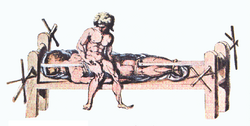
Hippocrates Bench, a symbol of ancient Greek medical learning
Contribution of Galen to Unani Medicine
After Hippocrates, another Greek physician named Galen played a major role in developing Unani ideas. Galen expanded the theory of humours and explained how diet, exercise, and environment affect health.
He also classified medicines based on their effects on the body. His writings were very detailed and scientific for his time. Many of Galen’s books were preserved and translated later, helping Unani medicine grow further.
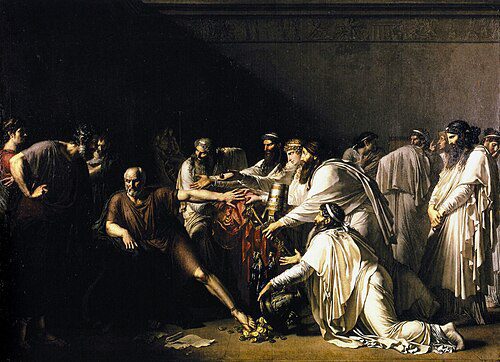
Hippocrates Refusing the Gifts of Artaxerxes Ancient Medical Ethics Scene
Spread of Greek Medicine to the Arab World
When Greek civilization declined, much of its medical knowledge moved to the Arab and Persian regions. During the Islamic Golden Age (8th to 13th century), scholars carefully studied and preserved Greek medical texts.
These scholars translated Greek books into Arabic and added their own observations and improvements. This is why Unani medicine is sometimes called Greco-Arab medicine.
During this period, Unani medicine became more organized and practical.
Ibn Sina and the Canon of Medicine
One of the greatest contributors to Unani medicine was Ibn Sina (also known as Avicenna). He lived in the 10th century and wrote a famous medical book called “Al-Qanun fi al-Tibb” (The Canon of Medicine).
This book explained:
- Human anatomy
- Causes of diseases
- Diagnosis methods
- Treatment using diet, lifestyle, and medicines
The Canon of Medicine was used as a medical textbook in many parts of the world for hundreds of years. Ibn Sina’s work gave Unani medicine a strong scientific base and global recognition.
Development of the Unani System of Medicine
Over time, Unani medicine became a complete system with clear principles. One important concept is Mizaj, which means temperament. According to Unani theory, every person has a unique temperament influenced by elements like heat, cold, moisture, and dryness.
Unani doctors treat illness by correcting the body’s temperament using:
- Proper diet
- Natural medicines
- Lifestyle changes
- Regimental therapies
This holistic approach made Unani medicine popular across many regions.
Arrival of Unani Medicine in India
The spread of Unani medicine in India began around the 12th century. It came to India through Arab and Persian scholars, traders, and later during the Delhi Sultanate and Mughal period.
Indian climate, herbs, and culture influenced Unani practices. Local plants were added to Unani medicines, making treatments more suitable for Indian conditions.
Indian scholars also made valuable contributions, helping Unani medicine grow further.
Growth During the Mughal Period
The Mughal rulers strongly supported Unani medicine. Many Unani physicians were appointed in royal courts. Hospitals and medical schools were established to teach and practice the Unani system of medicine.
Famous Indian Unani scholars wrote books and trained students during this time. Unani medicine became widely accepted by people from all backgrounds.
This period played a major role in making Unani medicine a part of Indian traditional healthcare.
Unani Medicine During British Rule
During British rule, Western medicine became more dominant in India. As a result, traditional systems like Unani faced challenges. However, Unani medicine survived because of dedicated practitioners and public trust.
Several Unani institutions continued to function, keeping the knowledge alive. This period tested the strength of Unani medicine, but it did not disappear.
Unani Medicine in Modern India
After independence, the Indian government officially recognized Unani medicine. Today, it is part of the AYUSH systems, which include Ayurveda, Yoga, Unani, Siddha, and Homeopathy.
There are:
- Unani colleges
- Research centers
- Government hospitals
- Registered Unani practitioners
The Unani system of medicine is now regulated and taught in a structured manner across India.
Importance of Unani Medicine Today
Unani medicine focuses on prevention, balance, and natural healing. It encourages healthy eating, proper sleep, physical activity, and mental well-being.
Because of its holistic approach, many people prefer Unani medicine as a supportive healthcare system. Its long history proves its importance and relevance even in modern times.
Conclusion
The history of Unani medicine shows a long journey from ancient Greece to modern India. It started with Greek thinkers like Hippocrates, developed through Arab scholars like Ibn Sina, and flourished in India with local contributions.
Unani medicine is not just a medical system; it is a way of understanding health through balance and nature. Its survival over centuries proves its value as a traditional system of healing.