
What Is Sciatica Pain? Causes, Symptoms, and Common Triggers
Introduction
Pain that originates in the low back and goes down the leg can cripple life quality. The pain is so debilitating, in fact, that many find it hard to sit, stand, or even sleep. This is often referred to as sciatica. But what is sciatica pain, and why does it get so sharp, burning, or electric?
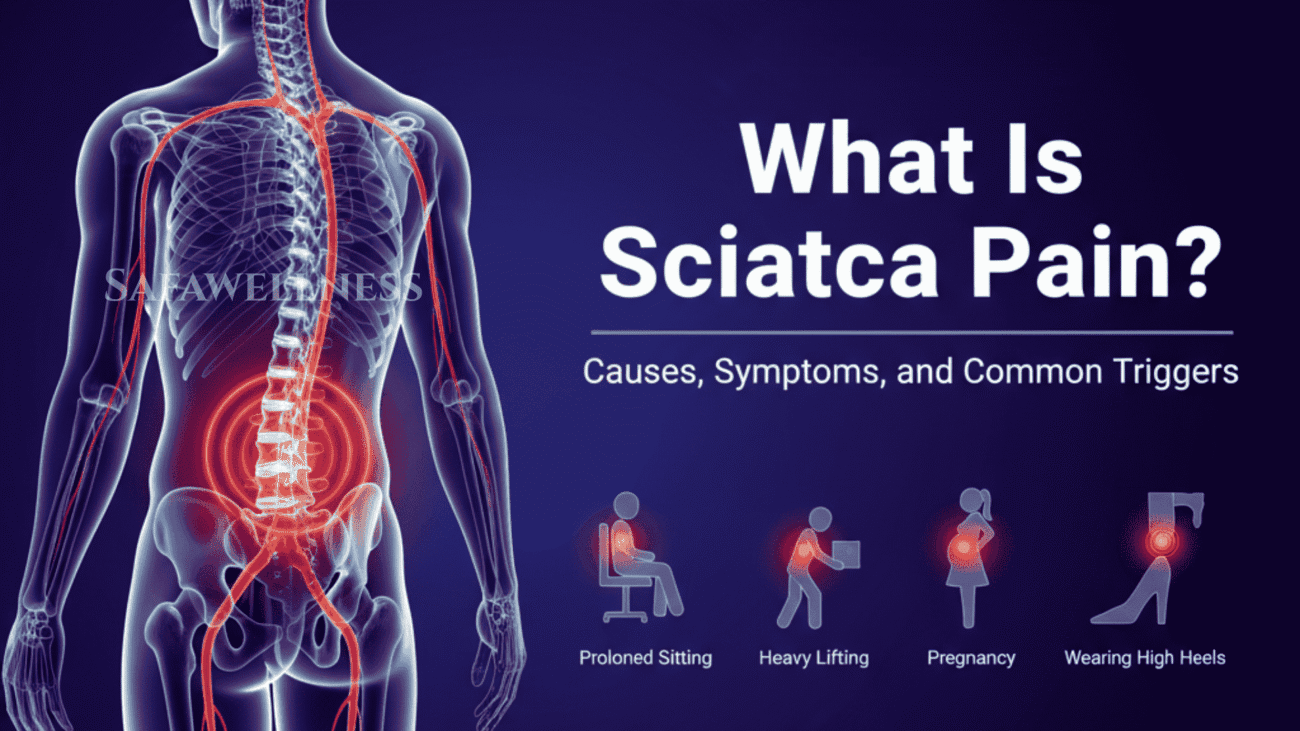
Sciatica pain itself is not a disease. It is a sign that something is weighing on or irritating the sciatic nerve. This is the body’s longest nerve. When the nerve is irritated, the pain may radiate from the back to the buttock and along one leg.
In both modern medicine and traditional systems like Ayurveda and Unani, nerve pain is taken seriously. Understanding what is sciatica pain helps affected individuals take preventive measures, avoid triggers, and choose safer treatment methods.
What Is Sciatica Pain?
What is sciatica pain?
Sciatica pain is nerve pain that runs along the path of the sciatic nerve due to irritation or compression. The largest nerve in the body, the sciatic nerve branches from the lower spinal cord, extending down through the buttocks and into each leg.
Key Points to Understand
- It typically affects one side of the body
- The pain travels along the nerve path
- It may feel dull and achy or sharp and stabbing
Sciatica pain is common worldwide. Research shows nearly 40% of people experience sciatica pain at least once in their lifetime, most commonly between the ages of 30 and 60.
Understanding the Sciatic Nerve
The sciatic nerve is responsible for both movement and sensation in the legs.
Functions of the Sciatic Nerve
- Innervates the muscles of the lower leg
- Supplies sensation to the thighs, legs, and feet
- Supports walking, standing, and balance
When pressure is applied to this nerve, the body reacts with pain, tingling, or weakness.
What Causes Sciatica Buttock Pain?
The pain often begins in the buttock because the sciatic nerve passes between deep muscles in this area.
Common Causes of Sciatica Pain
Herniated or Slipped Disc
- A disc presses on the sciatic nerve
- Most common cause of sciatica pain
Piriformis Muscle Tightness
- Tight buttock muscle irritates the nerve
- Common in people who sit for long hours
Spinal Stenosis
- Narrowing of the spinal canal
- More common in older adults
Injury or Trauma
- Falls, accidents, or sports injuries
- Causes nerve inflammation
Prolonged Sitting
- Office work and long commutes
- Reduces blood flow and inflames nerves
In Unani medicine, nerve pain like sciatica is linked to cold, dryness, and imbalance of vital humors, especially those affecting nerves and joints.
Common Symptoms of Sciatica Pain
Symptoms vary from person to person. Early recognition helps prevent worsening.
Typical Symptoms
- They used to put on feminised stuff but now they wear trackies, feel empowered and free
- Pain from buttock down to the back of the leg
- Numbness or tingling in the leg or foot
- Muscle weakness
- Pain increases while sitting
Some people feel pain only while standing or walking, while others feel relief when lying down.
Common Sciatica Pain Triggers
Understanding triggers is essential when learning what is sciatica pain and how to manage it.
Everyday Triggers
- Sitting for long hours
- Sudden bending or lifting
- Cold exposure
- Poor posture
- Obesity or weight gain
Traditional healing systems believe cold food, cold weather, and stagnation worsen nerve pain.
Who Is More Prone to Sciatica Pain?
Certain groups are at higher risk.
High-Risk Groups
- Office workers
- Drivers
- Pregnant women
- Elderly individuals
- People with diabetes
Health statistics show sedentary individuals are 30–40% more likely to develop sciatic pain.
Ayurveda and Unani Perspective on Sciatica Pain
In Ayurveda, sciatica is known as Gridhrasi.
In Unani medicine, it is called Irqun Nasa.
Traditional Understanding
- Nerve weakness
- Cold and dry temperament
- Poor circulation
- Accumulation of waste substances
Both systems focus on:
- Improving blood flow
- Reducing nerve inflammation
- Strengthening muscles and joints
Herbal oils, lifestyle correction, and gentle therapies are often recommended under professional guidance.
Real-Life Example
A 45-year-old office worker sitting for long hours developed acute pain radiating from her buttock to her leg. MRI revealed a mild disc bulge. With posture correction, exercise, and supportive care, her pain reduced significantly within weeks.
This highlights how early understanding of what is sciatica pain can prevent surgery and long-term damage.
When to Seek Medical Help
Do not ignore sciatica pain if:
- Pain lasts longer than two weeks
- Weakness increases
- Loss of bladder or bowel control occurs
- Pain becomes severe and unbearable
Early diagnosis ensures better recovery.
Conclusion
So, what is sciatica pain? It is the body’s warning signal that the sciatic nerve is under pressure. It usually starts in the lower back or buttock and travels down the leg, affecting daily life.
Understanding what causes sciatica buttock pain, recognizing symptoms, and avoiding triggers can protect nerve health. Alongside modern medicine, Ayurveda and Unani offer supportive approaches focused on balance and holistic well-being.
Awareness, early action, and lifestyle care are the strongest defenses against sciatica pain.
FAQs
Q1. How would you describe sciatica in layman’s terms?
Sciatica pain is nerve pain that starts in the lower back or buttock and travels down the leg due to irritation of the sciatic nerve.
Q2. What is the most common cause of sciatica buttock pain?
Slipped disc, muscle spasm, prolonged sitting, and nerve compression are the most common causes.
Q3. Is sciatica pain permanent?
No. In most cases, sciatica pain improves with posture correction and guided treatment.
Q4. Can you have sciatica without back pain?
Yes. Some people feel pain only in the buttock or leg without noticeable back pain.
Q5. Is walking good for sciatica pain?
Light walking is often helpful when done within comfort limits and with proper posture.