
Ayurvedic Medicine Explained: Principles, Doshas, and Safety
Introduction: Reconnecting with Nature’s Rhythm
Do you ever feel as though your body is talking to you and yet the language is unknown? Perhaps you’re tired, even though you slept; or anxious for no apparent reason. In our high-speed society, we frequently respond to these early signs with a fast pill. But what if the solution was not about silencing the symptom, but decoding the story your body is trying to tell you?
This is the core of Ayurvedic medicine
As a physician trained in traditional systems of medicine, I meet patients every single day who are seeking much more than a way to “fix” themselves — they’re looking for something different that we can all understand: meaningful connection. Ayurveda is not merely a list of herbal remedies; it’s a 5,000-year-old whisper from history reminding us that health is more than the absence of disease: it is a vibrant state of balance.
In this post, we will be going on a guided tour through Ayurvedic medicine: a beginner’s guide to Ayurveda, what are the doshas in Ayurveda, and a candid conversation about Ayurvedic medicine safety. This guide is for you whether you are a beginner or already looking for more in-depth answers.
What Is Ayurvedic Medicine?
The goal of Ayurveda is blending and balancing the body, mind, and spirit using a number of methods. Ayurvedic medicine, as a form of alternative and holistic medicine, was developed in India and is built on the theory that you are as healthy as your mind, body, and spirit are working harmoniously together.
This differs from Western medicine, which often focuses on fighting germs and disease. Ayurveda relies more on prevention through good living practices. It employs diet, herbal remedies, exercise, meditation, and physical therapy to help you stay in tune with nature.
Key Beliefs
- Everything in the universe, living and dead, is connected
- You are well if your mind, body, and soul are in sync with the universe
- When something throws that balance off, illness begins
The Three Pillars: The Doshas in Ayurveda

To understand Ayurvedic medicine, you have to understand the fuel that makes you go. According to Ayurveda, we are all made up of five basic elements present in the universe:
- Space
- Air
- Fire
- Water
- Earth
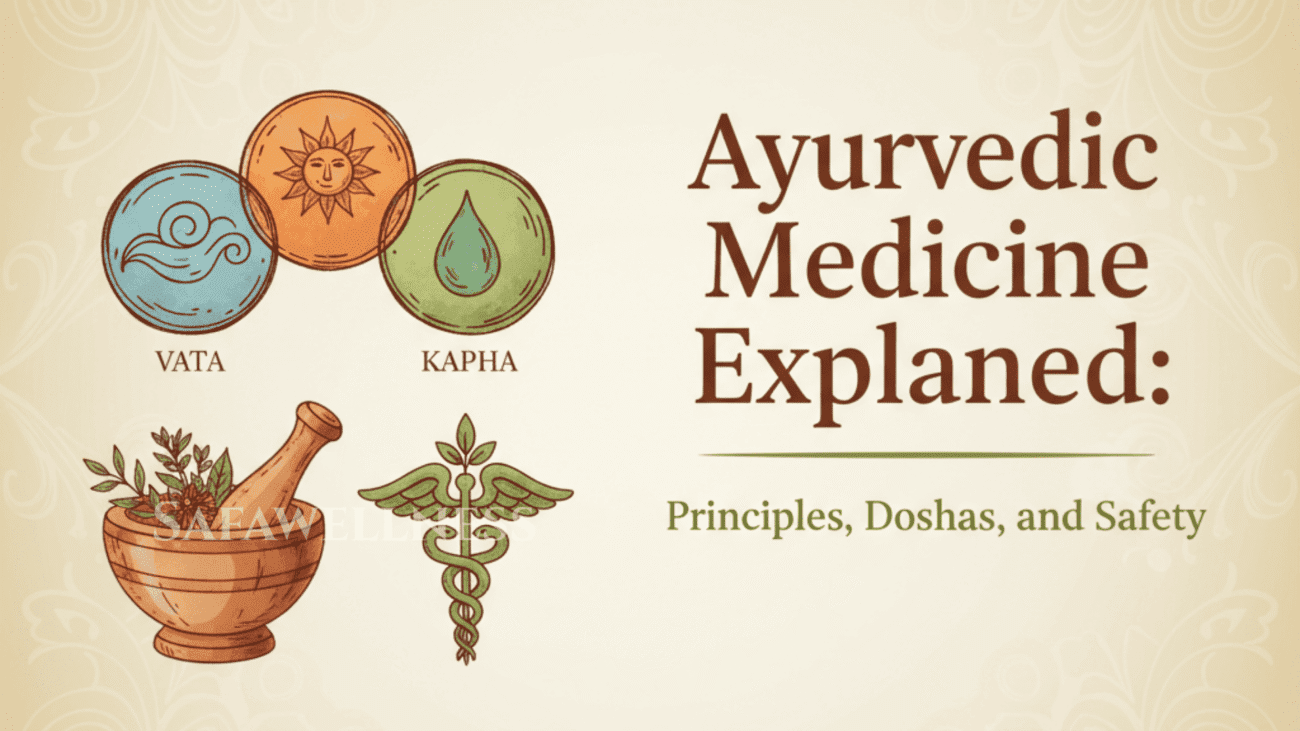
These components unite in the human body to create three life forces or energies, known as doshas. These govern how your body operates. The three are called Vata, Pitta, and Kapha.
Vata Dosha (Space and Air)
In Ayurvedic , professionals consider Vata the most dominant dosha. It manages essential body processes like how cells divide. It governs your mind, breathing, blood circulation, heart function, and ability to eliminate waste through your intestines.
Strengths
- Creative
- Energetic
- Quick learner
Weaknesses
- Anxiety
- Dry skin
- Poor digestion
Pitta Dosha (Fire and Water)
This energy regulates digestion, metabolism (how efficiently you break down foods), and some hormones connected to appetite.
Strengths
- Intelligent
- Purposeful
- Strong digestion
Weaknesses
- Anger
- Heartburn
- Skin rashes
Kapha Dosha (Water and Earth)
Kapha is in charge of muscle development, body strength and stability, weight, and the immune system.
Strengths
- Calm
- Loyal
- Strong immunity
Weaknesses
- Weight gain
- Oversleeping
- Breathing problems
Knowing the doshas in Ayurveda allows me, as a doctor, to develop an individual treatment plan. We do not only treat the headache; we treat the imbalance that produced it.
Ayurveda and Unani: A Common Heritage of Healing
I am a BUMS doctor following Unani medicine, which has a strong brotherhood with Ayurvedic treatment. Though Ayurveda was born in India and Unani originated from Greece and the Arab world, both agree on one great wisdom: nature is the cure.
In India, we often find Ayurvedic products side by side with Unani products. Both systems use:
- Herbs: Plants are a pharmacy for both
- Temperament / Dosha: Unani studies Mizaj, Ayurveda studies Doshas
- Purification: Both believe in detoxing the body
Choosing Ayurveda or Unani means respecting the body’s innate intelligence.
Real Talk: Is Ayurveda Safe?
This is the most important section. Safety is non-negotiable. Although Ayurvedic is natural, “natural” does not always mean “safe” if used incorrectly. We must talk openly about Ayurvedic safety.
The Heavy Metal Concern
Some traditional Ayurveda preparations contain metals such as lead, mercury, or arsenic. In classical texts, these are purified through a process called Shodhana to make them safe.
However, studies show that if purification is incomplete or if herbs are grown in contaminated soil, these metals may become harmful.
The Stat:
A 2008 study found that about 20% of Ayurvedic medicine products sold online contained detectable heavy metals.
The Risk:
These can be toxic if taken without medical supervision.
How to Ensure Safety
To use Ayurvedic safely:
- Visit a physician: Always consult a BAMS or BUMS doctor
- Check certification: Look for GMP-certified products
- Read labels: Avoid metal-containing formulations unless advised by experts in Rasa Shastra
Ayurvedic medicine is safe when used correctly. Risk comes from poor-quality products and lack of guidance.
Why the Global Interest in Ayurvedic Medicine?
The global Ayurveda market was valued at over $12 billion in 2024 and is expected to double by the end of the decade. The reason is simple: people are tired of side effects.
Case Example
“Riya” (name changed), a 45-year-old woman with chronic joint pain, developed stomach ulcers from long-term painkiller use. She turned to Ayurvedic medicine. With anti-inflammatory herbs like turmeric and ashwagandha and oil massage (Abhyanga), her pain reduced by 60% in three months, without stomach damage.
This shows how Ayurveda works with the body, not against it.
Benefits of Ayurvedic Medicine
People trust Ayurveda for many reasons:
- Stress reduction: Yoga and meditation are core practices
- Clear skin: Blood purification supports skin health
- Better digestion: Eating according to doshas reduces bloating
- Hormonal balance: Herbs like Shatavari support women’s health
Conclusion: Your Path to Balance
Ayurveda is not magic; it is a science. It asks you to observe what you eat, how you sleep, and how you feel. When you understand the doshas in Ayurveda, you gain a roadmap of your body.
The aim of Ayurveda is a long, healthy life. Keep Ayurveda safety at the top of your priorities. Seek experts, choose quality, and listen to your body.
In a noisy world, Ayurveda teaches you how to find your quiet center.
Frequently Asked Questions
Q1: Can Ayurvedic medicine be taken with allopathic medicine?
Yes, generally, but caution is needed. Some herbs may interact with modern drugs. Always inform your doctor.
Q2: How long does Ayurvedic medicine take to show results?
For chronic issues, noticeable improvement may take 4–8 weeks. Ayurveda works gradually.
Q3: Does Ayurveda help with weight loss?
Yes. Weight gain is often linked to Kapha imbalance and is managed through herbs, diet, and detox.
Q4: Are there side effects of Ayurvedic medicine?
Side effects may occur if used improperly. Mild issues include stomach upset or allergies. Medical guidance is essential.
Q5: How do I identify my dosha type?
The most accurate method is assessment by an Ayurvedic physician using pulse diagnosis (Nadi Pariksha). Online quizzes can offer a rough idea.