
What Causes Early Discharge in Men? A Simple Explanation
Introduction
Early discharge, medically called premature ejaculation (PE), is one of the most common sexual health concerns in men. It happens when a man ejaculates sooner than he or his partner expects, usually within one to three minutes of penetration. Studies show that about 1 in 3 men experience this issue at some point in life. Understanding the causes of early discharge in men is important because the condition is common, treatable, and often linked to simple mental or physical factors. This article explains the problem in clear, simple English, using medical facts and real-life understanding.
Causes of Early Discharge in Men
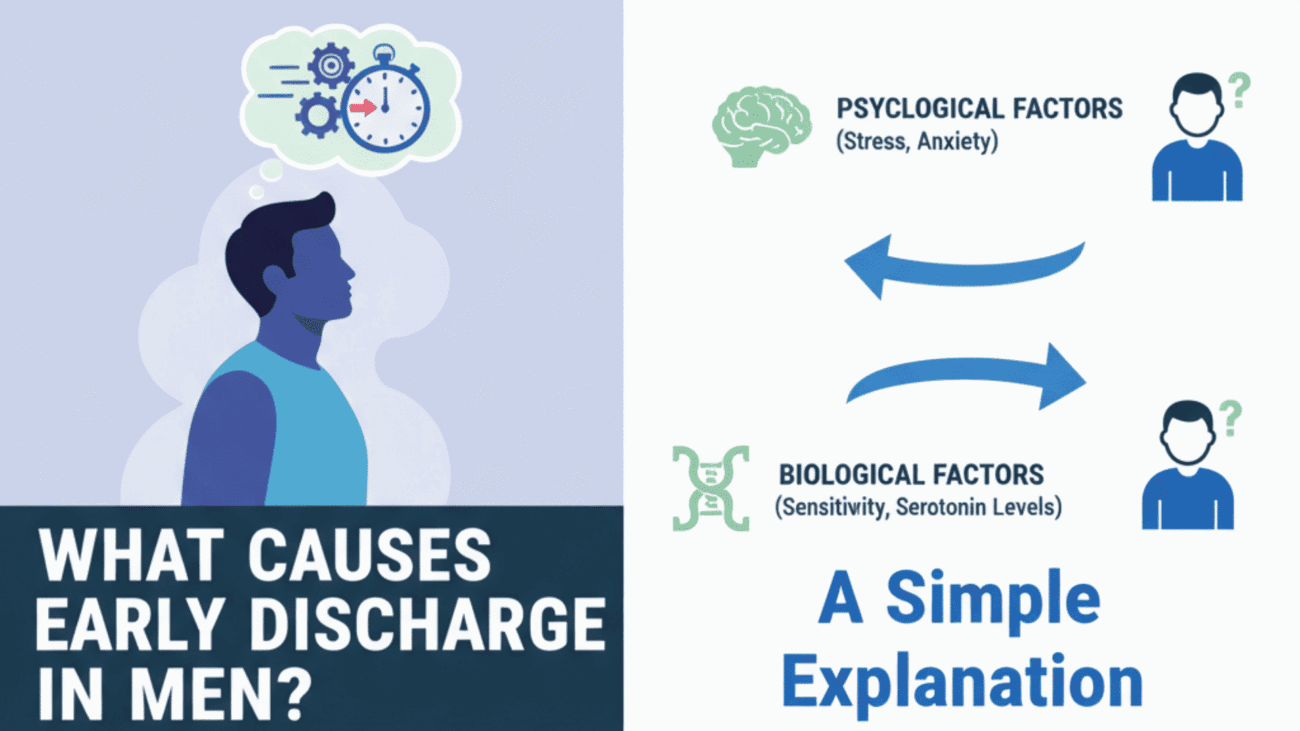
The causes of early discharge in men are generally divided into psychological (mental) and physical or biological reasons. Often, more than one cause is involved.
1. Psychological Causes
Mental and emotional health plays a major role in sexual performance. In many cases, early discharge happens without any physical disease.
Common psychological reasons include:
- Anxiety: Performance anxiety is one of the top reasons for premature ejaculation. Worrying about lasting longer can actually make ejaculation happen faster.
- Early sexual experiences: If early sexual activity was rushed or stressful, the body may learn a habit of quick climax.
- Relationship stress: Emotional distance, frequent arguments, or lack of communication with a partner can affect control.
- Depression and guilt: These mental states can disturb how the brain controls arousal and ejaculation.
These factors help explain why does quick discharge happen even in healthy men.

2. Physical and Biological Causes
Physical factors are less common but still important when understanding premature ejaculation causes and symptoms.
Key physical causes include:
- Chemical imbalance: Low levels of serotonin, a brain chemical that helps delay ejaculation, are linked to faster climax.
- Erectile dysfunction (ED): Men who fear losing an erection may rush to ejaculate, creating a habit of early discharge.
- Hormonal imbalance: Abnormal levels of testosterone, thyroid hormones, or oxytocin can affect timing.
- Infections: Prostate or urinary tract infections can cause irritation, leading to faster ejaculation.
- High penile sensitivity: Some men naturally have more sensitive penile skin, making control more difficult.
Types of Premature Ejaculation
Understanding the type helps identify the reasons for premature ejaculation.
- Lifelong (Primary): Present from the first sexual experience.
- Acquired (Secondary): Develops later in life after a period of normal sexual function, often due to stress or health issues.
Common Symptoms
- Ejaculation within 1–3 minutes
- Difficulty delaying climax
- Stress or frustration related to intimacy
- Reduced sexual confidence
When Should You Seek Help?
Occasional early discharge is normal and not a medical problem. However, you should seek professional advice if:
- It happens frequently
- It causes stress or embarrassment
- It affects your relationship
Most cases are highly treatable through behavioral techniques like the stop-start or squeeze method, counseling, lifestyle changes, or medical treatment when needed.
Conclusion
Early discharge is a common and manageable condition. The causes of early discharge in men include mental stress, anxiety, hormonal imbalance, nerve sensitivity, and certain medical conditions. Understanding the root cause is the first step toward improvement. With proper guidance, awareness, and care, most men can regain control and confidence over time.
FAQs
Q1. Is early discharge a disease?
No. It is a common sexual condition and often temporary.
Q2. Why does quick discharge happen suddenly?
Sudden stress, anxiety, health issues, or hormonal changes can trigger it.
Q3. Can premature ejaculation be cured?
Yes. Most cases improve with proper treatment and lifestyle changes.
Q4. Is it normal at a young age?
Yes. Many young men experience it due to anxiety or lack of experience.
Q5. Should I see a doctor?
If the problem is frequent or causes distress, medical advice is recommended.