
Muesli Benefits and Side Effects in Men’s Wellness: Insights from Unani and Ayurveda
Introduction
Many people today choose healthy breakfast foods to support their daily energy and overall wellness. One popular breakfast option is muesli, a mix of whole grains, nuts, seeds, and dried fruits. It is known for being rich in fiber and nutrients. Because of this, many people want to understand muesli benefits and side effects, especially in relation to men’s wellness.
Traditional systems like Unani and Ayurveda focus strongly on balanced nutrition. They believe that natural foods can help support the body’s strength, digestion, and vitality. In this article, we will explore muesli benefits and side effects, and also understand how natural ingredients like safed musli are viewed in traditional medicine.
What Is Muesli?
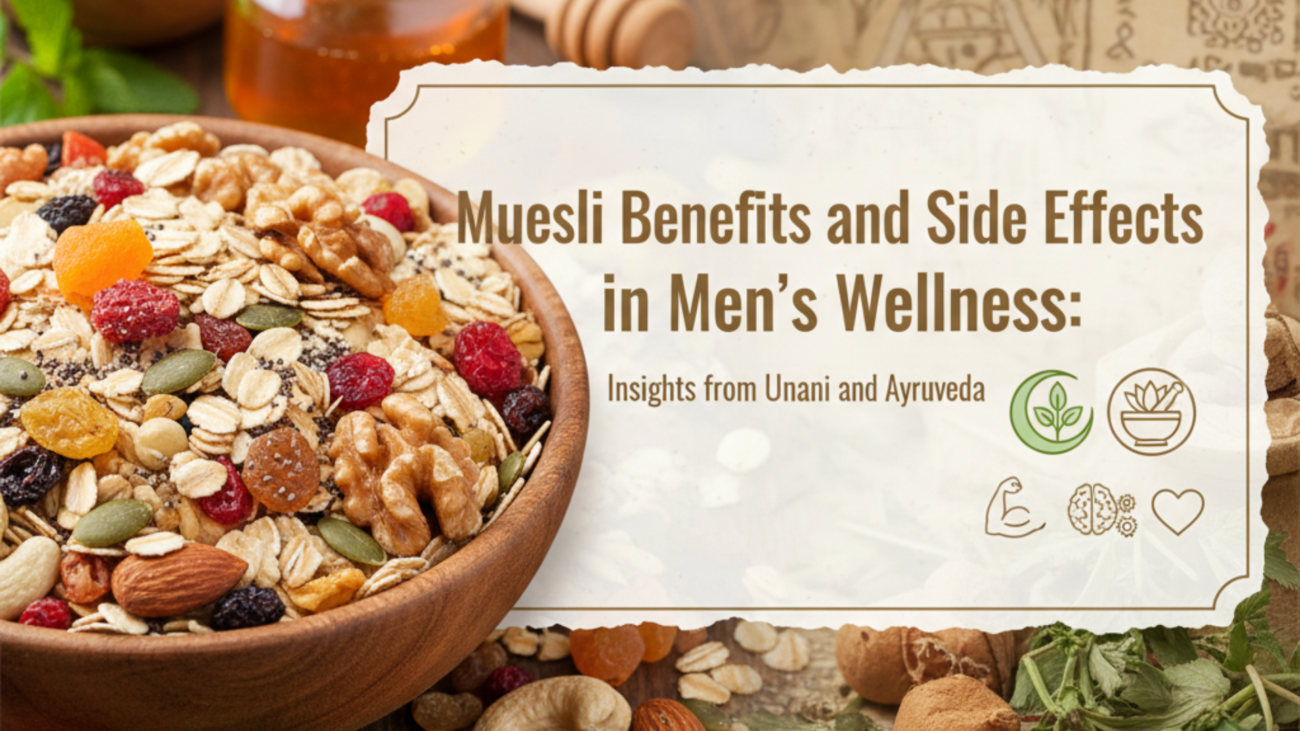
Muesli is a healthy breakfast food that usually contains:
- Oats or other whole grains
- Nuts such as almonds or walnuts
- Seeds like pumpkin or sunflower seeds
- Dried fruits such as raisins or dates
These ingredients provide important nutrients such as fiber, vitamins, minerals, and healthy fats. Because of its natural ingredients, many nutrition experts consider muesli a balanced meal that can support daily health.
Muesli Benefits for Men’s Wellness
Understanding muesli benefits and side effects helps people choose the right amount and the right way to include it in their diet.
1. Supports Energy Levels
Muesli contains complex carbohydrates from oats and grains. These carbohydrates release energy slowly in the body. This helps people stay active for a longer time during the day.
In traditional medicine systems, foods that provide steady energy are considered helpful for maintaining overall strength.
2. Helps Improve Digestion
One of the important muesli benefits is its high fiber content. Fiber supports healthy digestion and helps maintain regular bowel movement.
Both Unani and Ayurveda emphasize the importance of good digestion. According to these systems, proper digestion helps the body absorb nutrients and maintain balance.
3. Supports Heart Health
Many ingredients in muesli, such as nuts and seeds, contain healthy fats. These fats may help maintain normal cholesterol levels when consumed in moderation.
A balanced diet that includes whole grains and nuts is often recommended for long-term health.
4. Supports Men’s Strength and Vitality
A nutritious diet plays an important role in men’s wellness. Muesli contains protein, minerals, and vitamins that support the body’s strength and daily performance.
Natural foods that provide energy and nutrients are often valued in traditional medicine for maintaining physical vitality.
Safed Musli Benefits in Traditional Medicine
When discussing men’s wellness in Unani and Ayurvedic traditions, another well-known herb is Safed Musli. Many people are interested in safed musli benefits because it has been used for centuries in herbal formulations.
Safed Musli Benefits
Traditional medicine describes several possible benefits of safed musli, including:
- Supporting physical strength
- Helping maintain stamina
- Supporting reproductive health
- Promoting overall vitality
Because of these traditional uses, safed musli is often included in herbal supplements for men’s wellness.
Safed Musli Uses in Herbal Formulations
There are many traditional safed musli uses in natural medicine. It is commonly used in herbal preparations such as powders, capsules, or traditional formulations that support strength and vitality.
In Ayurveda and Unani medicine, herbs are usually combined with other natural ingredients to create balanced formulas that support the body.
However, herbal products should always be taken according to proper guidance and recommended dosage.
Possible Side Effects of Muesli
While discussing muesli benefits and side effects, it is important to understand that even healthy foods should be eaten in moderation.
Possible side effects may include:
1. High Calorie Intake
Some muesli products contain added sugar, honey, or chocolate. Eating large amounts may increase calorie intake.
2. Digestive Discomfort
Because muesli contains high fiber, eating too much at once may cause bloating or stomach discomfort in some people.
3. Allergic Reactions
People who are allergic to nuts, seeds, or certain grains should check the ingredients carefully before consuming muesli.
How to Consume Muesli in a Healthy Way
To enjoy muesli benefits while avoiding unwanted effects, it is important to eat it in a balanced way.
Common ways to eat muesli include:
- With warm or cold milk
- With yogurt or curd
- With fresh fruits such as banana or apple
Eating a moderate portion as part of a balanced diet can help support overall wellness.
The Importance of Balanced Nutrition in Unani and Ayurveda
Both Unani and Ayurvedic medicine emphasize the idea of balance in diet and lifestyle. According to these traditional systems, natural foods such as grains, nuts, and fruits should be consumed in the right proportion.
Foods that support digestion, strength, and energy are considered beneficial for maintaining long-term health. Combining healthy foods with proper lifestyle habits can help support men’s wellness and overall vitality.
Conclusion
Understanding muesli benefits and side effects helps people make better dietary choices. Muesli is a nutritious breakfast food that contains whole grains, nuts, seeds, and dried fruits. These ingredients provide fiber, vitamins, and minerals that support energy, digestion, and overall health.
Traditional systems like Unani and Ayurveda also highlight the importance of natural foods and herbs for maintaining wellness. Herbs such as safed musli are known in traditional medicine for supporting strength and vitality, and many people are interested in safed musli benefits and traditional safed musli uses.
While muesli can be a healthy addition to the diet, it should always be consumed in moderation and as part of a balanced lifestyle. A combination of proper nutrition, healthy habits, and traditional knowledge can help support long-term wellness.
Whole grains like oats are known for their fiber and nutrient content, which support digestive health and overall wellness.
Suggested source:
https://www.hsph.harvard.edu/nutritionsource/whole-grains/