
What Is Talbina? Everything You Need to Know About This Sunnah Food
Introduction
Many traditional foods have been of interest in modern nutrition, especially those from the Unani and Ayurvedic systems of healing. Talbina is one of those simple yet potent foods. Talbina is a comforting food that has been consumed for hundreds of years and promotes a healthy body, energy, and mental well-being.
It leads many people to ask “What Is Talbina?” and why it is recommended in Islam. Talbina is a soft porridge made from barley, which makes it easy to digest and rich in fiber, vitamins, and minerals. Due to the nutrients it contains, it is often classified as a family natural immune booster food.
Talbina is suitable for adults and children. In fact, many parents now use it for kids as an immune booster because it is gentle on the stomach and sustains energy.
In this article, we will explain what Talbina is, along with the benefits of Talbina in the Sunnah, scientific research, its heart health benefits, and how to prepare it at home.
What Is Talbina?
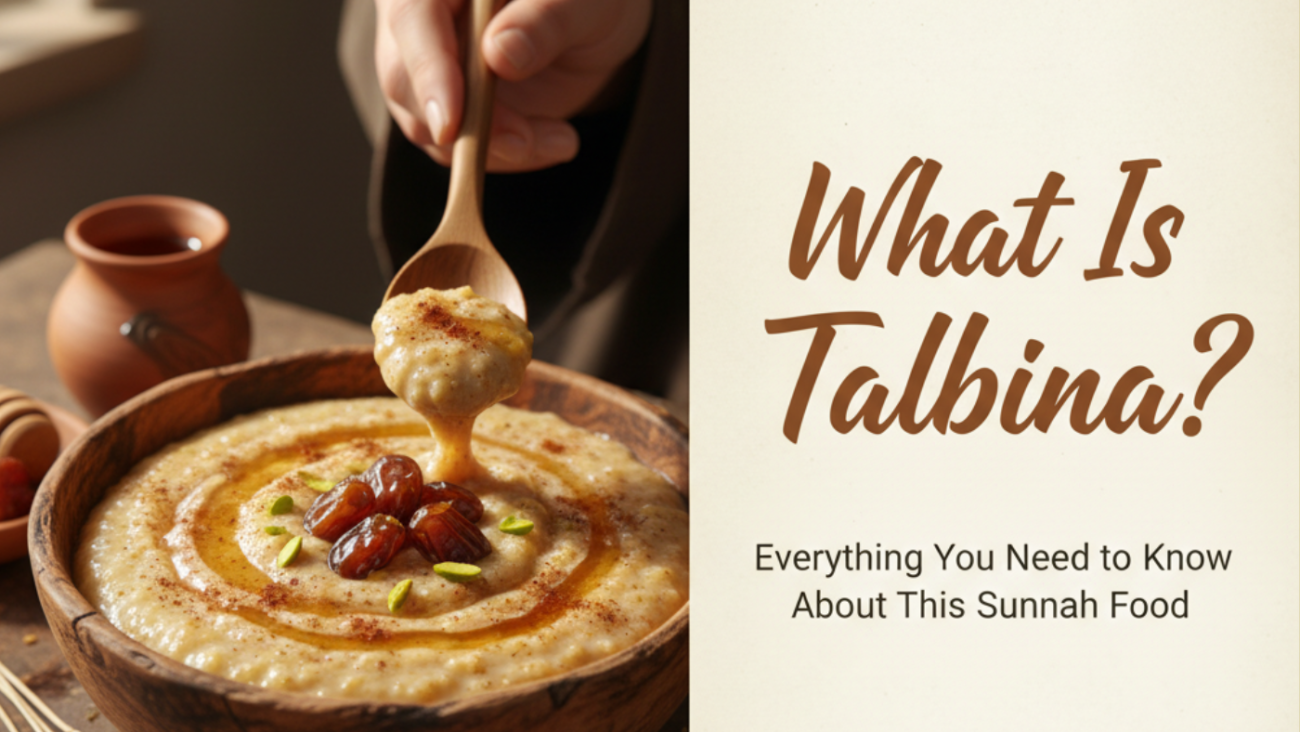
Talbina is a traditional porridge that is typically prepared with barley flour. It is usually cooked with water or milk and occasionally sweetened with honey. Today, many homes also prepare Talbina with mixed dry fruits such as almonds, dates, and cashews to enhance its nutrition.
The word Talbina comes from the Arabic term “laban,” which means milk. The porridge has a pale color and smooth texture that resembles milk.
Talbina has been used for centuries as a comforting food. It is known for its gentle, warm, and nourishing qualities.
Example sentence:
Talbinah is mentioned in authentic Hadiths of the Prophet Muhammad ﷺ.
Link idea:
Sahih Bukhari Hadith about Talbinah
Key Characteristics of Talbina
- Made mainly from barley flour
- Soft and easy to digest
- Often prepared with mixed dry fruits
- Can be cooked with milk or water
- Sweetened with natural honey
Because barley contains fiber and other nutrients, Talbina is widely considered an immunity booster food that supports overall wellness.
The Benefits of Talbinah in the Sunnah
In Islamic tradition, Talbinah holds a special place. It is mentioned in several authentic sayings (Ahadith) of the Prophet Muhammad ﷺ.
It was narrated from Aisha (RA) that she used to prepare Talbinah for a sick person or someone who was grieving and she would say, “Eat it.”
The Messenger of Allah ﷺ said:
“Talbinah soothes the heart of the sick person and removes some of the grief.”
(Narrated by Al-Bukhari and Muslim)
From these narrations, scholars explain that Talbinah was recommended for both physical and emotional comfort.
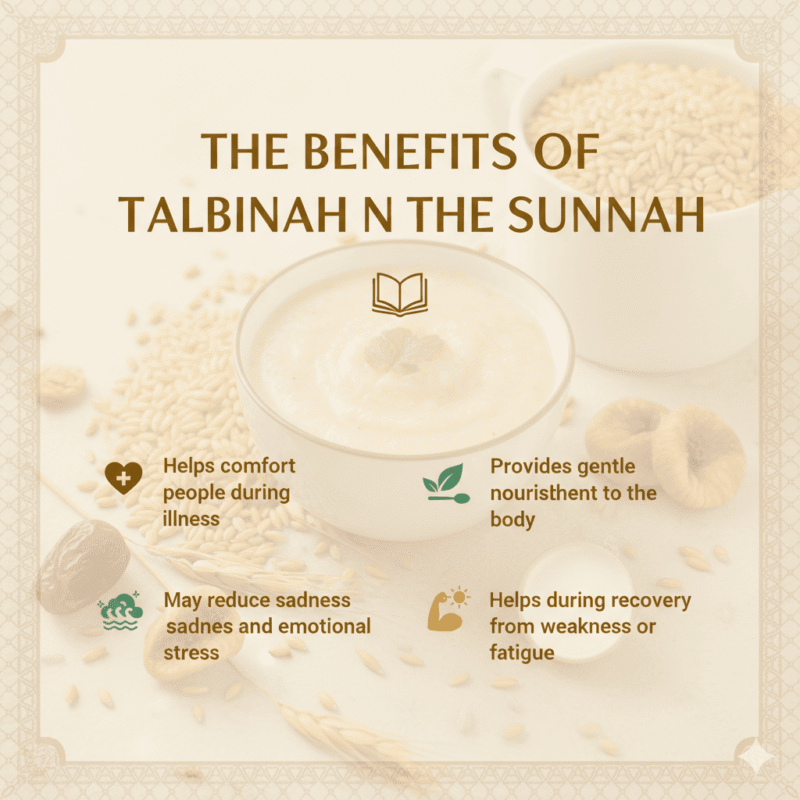
Sunnah Benefits of Talbinah
- Helps comfort people during illness
- May reduce sadness and emotional stress
- Provides gentle nourishment to the body
- Helps during recovery from weakness or fatigue
Because of its warmth and nutrients, Talbinah is often described as a natural immune booster food that restores energy.
Modern Scientific Research on Talbinah
Modern studies support many traditional beliefs about barley and Talbina. Barley is rich in beta-glucan fiber, which has several health benefits.
Studies published in nutrition journals and health databases such as NCBI show that barley can support different areas of health.
Health Benefits Found in Modern Research
- Helps lower cholesterol levels
- Supports heart health
- Helps manage blood sugar levels
- Supports digestive health
- Helps maintain healthy blood pressure
Barley also contains important nutrients such as:
- Magnesium
- Iron
- B-vitamins
- Antioxidants
These nutrients help Talbina act as a gentle immunity booster food that supports the body’s natural defenses.
When Talbina is prepared with mixed dry fruits, its nutritional value increases further. Dry fruits provide healthy fats, protein, and minerals that help maintain energy throughout the day.
How Talbinah Supports Heart Health
One of the most researched benefits of barley is its effect on heart health.
Nutrition experts explain that barley contains beta-glucan, a soluble fiber that helps reduce harmful cholesterol levels in the blood.
Lower cholesterol can reduce the risk of conditions such as:
- Heart disease
- Artery blockage
- High blood pressure
Medical nutrition experts explain that barley foods like Talbinah may help protect arteries and support circulation.
Dr. Sahba’ Bunduq explained that barley-based foods support cardiovascular health and may help protect arteries from damage.
This helps us understand the deeper meaning of the saying of the Prophet ﷺ:
“Talbinah soothes the heart of the sick.”
Today, scientists recognize that barley foods may support both heart health and emotional well-being.
The Superfood Power of Talbina: Key Ingredients
Talbina is simple but powerful because of its natural ingredients.
1. Barley Flour
Barley is the main ingredient of Talbina. It provides:
- High dietary fiber
- Important minerals
- Long-lasting energy
Barley is also easy to digest, which makes it suitable for children and elderly people.
2. Milk or Water
Talbina can be prepared with milk or water.
Milk adds:
- Calcium
- Protein
- Creamy texture
For those who prefer a lighter meal, water can also be used.
3. Raw Honey
Honey is a traditional natural sweetener used in Talbina.
It provides:
- Natural antioxidants
- Antibacterial properties
- Gentle sweetness
4. Mixed Dry Fruits
Many modern Talbina recipes include mixed dry fruits, such as:
- Almonds
- Cashews
- Dates
These ingredients add protein, healthy fats, and minerals, making Talbina a nutritious immune booster for kids.
How to Prepare Talbinah
Talbina is simple to prepare and takes only a few minutes.
Ingredients
- 2 tablespoons barley flour
- 1 cup milk or water
- 1 teaspoon honey (optional)
- Mixed dry fruits (optional)
Preparation Steps
- Place barley flour in a small pot.
- Add one cup of milk or water.
- Stir well to avoid lumps.
- Cook on low heat for about 5 minutes.
- Stir gently until the mixture becomes smooth.
- Add honey and mixed dry fruits if desired.
Your warm bowl of Talbina is now ready to serve.
Many families enjoy it as a healthy breakfast or evening comfort food.
Why Talbina Is Considered an Immune Booster Food
Talbina provides important nutrients that support daily health.
Its combination of fiber, minerals, and natural ingredients makes it a wholesome meal.
Reasons Talbina Supports Immunity
- Rich in fiber from barley
- Contains essential minerals
- Provides steady natural energy
- Easy to digest for children and adults
Because of these benefits, Talbina is often considered an immune booster food for both kids and adults.
Parents often serve Talbina to children as a warm and nourishing breakfast that supports growth and energy.
Conclusion
Talbina is a simple yet powerful food that connects traditional wisdom with modern nutrition. Made mainly from barley, it has been valued for centuries for its gentle nourishment and comforting qualities.
Understanding what Talbina is helps explain why it remains an important part of Islamic heritage and traditional diets.
From its mention in the Sunnah to modern scientific research, Talbina continues to be recognized as a wholesome and nourishing food.
Prepared with natural ingredients like barley, honey, and mixed dry fruits, Talbina offers balanced nutrition and warmth. For many families, it remains a trusted immunity booster food that supports health and daily energy.
Frequently Asked Questions
What Is Talbina?
Talbina is a soft porridge made from barley flour cooked with water or milk. It is a traditional Sunnah food that provides gentle nourishment and comfort.
Is Talbina good for immunity?
Yes. Talbina contains fiber, vitamins, and minerals that support overall health. Because of these nutrients, it is often considered a natural immune booster food.
At what age can Talbina be given?
Talbina is soft and easy to digest when prepared properly, which makes it suitable for children as well.
What are the ingredients of Talbina?
Traditional Talbina contains barley flour, water or milk, and honey. Many modern recipes also include mixed dry fruits such as almonds and dates.
What is the best time to eat Talbina?
Talbina is commonly eaten as a healthy breakfast, but it can also be enjoyed in the evening or whenever someone needs light and nourishing food.