

Erectile Dysfunction Explained: Symptoms, Physical and Psychological Causes

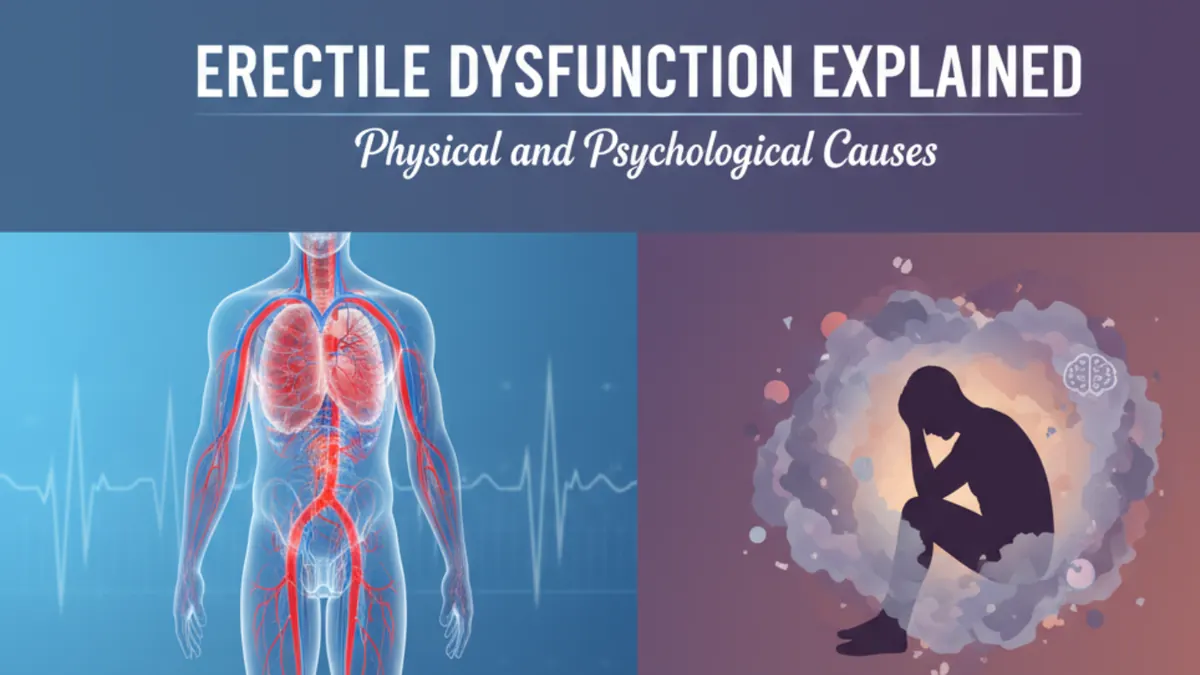
Quick answer: Erectile dysfunction (ED) means you regularly cannot get or keep an erection firm enough for sex. It is very common. About half of men aged 40–70 have some degree of it. The most common causes are physical: diabetes, high blood pressure, high cholesterol, smoking, obesity and some medicines. Stress, anxiety and depression also play a big part. ED can be an early warning sign of heart disease, so it is worth a check-up.
Key takeaways
- 52% of men aged 40–70 had some degree of ED in the Massachusetts Male Aging Study.
- Men with ED had a 45% higher risk of later heart problems in a large US study.
- Diet and exercise restored normal erections in 31% of obese men over 2 years.
- Occasional erection trouble is normal. ED means it happens regularly, for weeks or months.
- Many effective treatments exist. Do not self-treat with unlabelled pills.
This article is part of our guide to sexual wellness in Unani and Ayurveda.
ED in numbers
Sources are listed at the end of this article.
What is erectile dysfunction?
An erection happens when nerves send signals, blood vessels in the penis widen, and blood fills the spongy tissue. Anything that affects nerves, blood vessels, hormones or the mind can cause ED. In India it is often called napunsakta or stambhan dosh. Doctors call it ED when the problem is regular and lasts for weeks or months, not when it happens once or twice. For a Hindi explanation, read स्तंभन दोष क्या होता है.
What are the symptoms of ED?
- Trouble getting an erection
- Losing the erection before or during sex
- Erections that are not firm enough
- Fewer morning erections
- Lower desire, often because of worry about failing
What causes erectile dysfunction?
| Type | Common causes | Clue |
|---|---|---|
| Blood vessels | Diabetes, high BP, high cholesterol, smoking, obesity | Gradual onset, fewer morning erections |
| Hormones | Low testosterone, thyroid problems | Low desire, tiredness |
| Nerves | Diabetes nerve damage, spine injury, pelvic surgery | Numbness or tingling |
| Medicines | Some BP, depression and prostate medicines | Started after a new medicine |
| Mind | Anxiety, stress, depression, relationship problems | Sudden onset; normal morning erections |
| Lifestyle | Alcohol, lack of sleep, no exercise | Improves when habits improve |
If you also finish too early, read what causes early discharge in men. The two problems often go together.
Why is ED linked to heart disease?
The arteries in the penis are smaller than those in the heart, so narrowing can show up there first. In a large US study of over 4,000 men, those with ED had a 45% higher risk of a later heart attack, stroke or angina. So if you are over 40 and develop ED, get your blood pressure, blood sugar and cholesterol checked.
How is ED treated?
Treatment steps, from simple to specialist
Lose weight, exercise, stop smoking, limit alcohol, sleep well
Control diabetes, BP and cholesterol; review medicines
For anxiety, stress and relationship issues
Prescription medicines or other options, only after a check-up
Prescription ED medicines work well for many men but are not safe for everyone, especially those taking nitrates for heart pain. Never buy them without a prescription or take unlabelled “power” pills, which can contain hidden doses.
What do Unani and Ayurveda say about ED?
Unani calls weakness of sexual power zof-e-bah and links it with temperament, weak nerves and the health of the heart, brain and liver. Ayurveda covers it under vajikarana and links it with weak shukra dhatu and high vata. Both start with diet, sleep, exercise and stress control. Herbs such as ashwagandha, shilajit and safed musli are used traditionally, but their effect on ED has not been proven in large trials. See herbs and foods for men’s vitality, and the evidence and our guide to sexual wellness in Unani and Ayurveda.
When should you see a doctor?
- The problem lasts more than 3 months.
- You have diabetes, high BP, heart disease or chest pain.
- ED started after a new medicine. Do not stop the medicine yourself.
- You have pain, a curve in the penis, or an erection that will not go down (an emergency).
You can also talk to a Unani expert in confidence.
Frequently asked questions
What is erectile dysfunction in simple words?
Erectile dysfunction means regularly being unable to get or keep an erection firm enough for sex. Having trouble once in a while is normal. Doctors call it ED when it keeps happening for weeks or months.
What is the most common cause of ED?
In men over 40, the most common causes are problems with blood vessels from diabetes, high blood pressure, high cholesterol, smoking and obesity. In younger men, stress and anxiety play a bigger role.
Can erectile dysfunction be treated?
Yes, most men can be helped. Treatment depends on the cause. Options include lifestyle change, controlling diabetes and blood pressure, counselling and prescription treatments from a doctor. In one trial, 31% of obese men regained normal erections through diet and exercise alone.
Is ED a sign of heart disease?
It can be. Men with ED had a 45% higher risk of later heart problems in a large US study. If you develop ED, especially after 40, get your blood pressure, sugar and cholesterol checked.
Can stress cause erectile dysfunction?
Yes. Stress, anxiety and depression can block the signals that start an erection. A clue is having normal morning erections but trouble with a partner. Counselling and relaxation techniques often help.
Are herbal ED products safe?
Licensed products used on a doctor’s advice are generally well tolerated. But some “herbal” sex pills have been found to contain hidden prescription drugs, which can be dangerous with heart medicines. Always check the label and buy from trusted sellers.
Sources
- Feldman et al. (1994), Massachusetts Male Aging Study, PubMed
- Thompson et al. (2005), Erectile dysfunction and subsequent cardiovascular disease, JAMA
- Esposito et al. (2004), Lifestyle changes and erectile dysfunction in obese men, JAMA
- Laumann et al. (1999), Sexual dysfunction in the United States, JAMA
Medically reviewed by: Dr Saleha Perveen and Dr Danish Farhan (BUMS), Safawellness. Last updated: 6 November 2026.
This article is for general information only. It does not diagnose or treat any condition. Please consult a qualified doctor for personal advice.
