

Amla Murabba Benefits: Nutrition, How Much to Eat and Who Should Avoid It

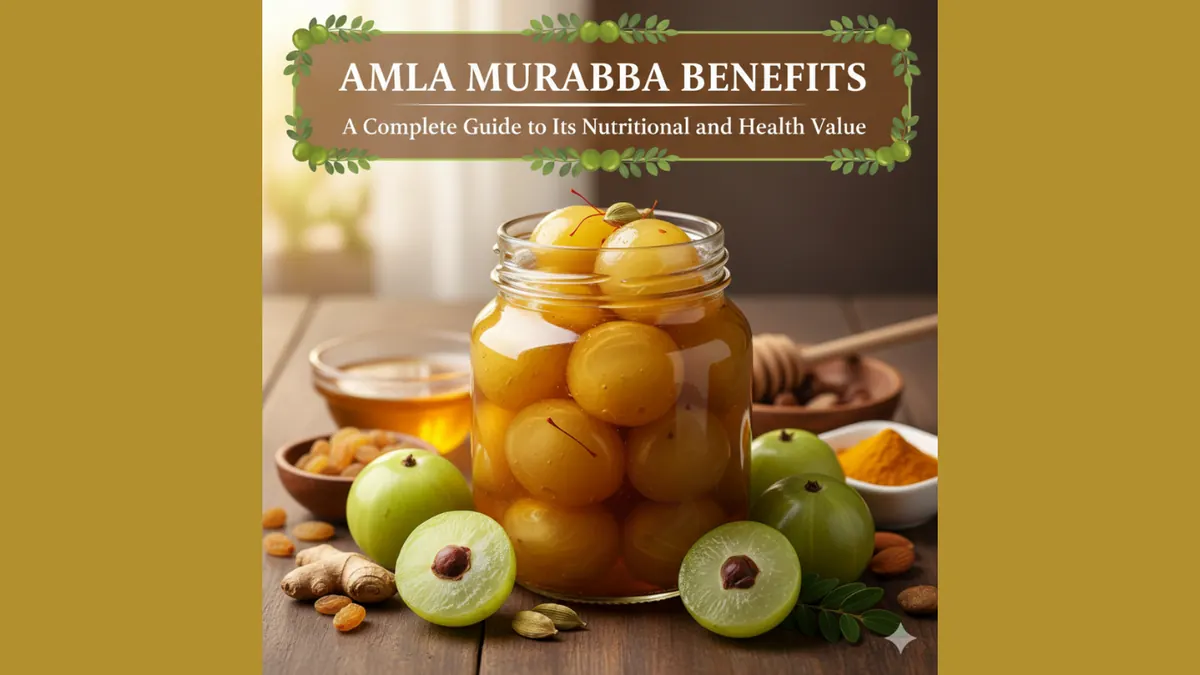
Quick answer: Amla murabba is Indian gooseberry (amla) cooked and preserved in sugar syrup. It gives fibre, antioxidants (polyphenols) and some vitamin C, and is traditionally eaten for digestion, immunity and hair. But cooking lowers the vitamin C, and the syrup adds a lot of sugar. So eat it in small amounts: one piece a day is enough. Fresh amla or amla juice gives more vitamin C with no added sugar.
Key takeaways
- Fresh amla is one of the richest fruit sources of vitamin C. Heat and long storage reduce it.
- Murabba is mostly sugar syrup by weight. One piece with a spoon of syrup can carry about 10–15 g of sugar.
- WHO advises keeping free sugar under about 25 g a day for good health.
- People with diabetes should avoid murabba or choose fresh amla instead.
- In Ayurveda, amla (amalaki) is a classic rasayana and one of the three fruits of triphala.
Fresh amla vs amla murabba
Fresh amla
Vitamin C: very high
Added sugar: none
Taste: sour, bitter
Good for: daily vitamin C, diabetes-friendly diets
Amla murabba
Vitamin C: lower (lost in cooking)
Added sugar: high
Taste: sweet, soft
Good for: a small daily treat with traditional value
What is amla murabba?
Amla (Phyllanthus emblica), also called Indian gooseberry, is a sour green fruit. To make murabba, whole amlas are pricked, boiled or steamed, and slowly cooked in thick sugar syrup, sometimes with cardamom or saffron. The sugar preserves the fruit for months and softens its sour taste. Murabba is popular in both Unani and Ayurvedic home traditions as a winter tonic.
What nutrients does amla murabba contain?
| Nutrient | In amla murabba | Note |
|---|---|---|
| Vitamin C | Present, but lower than fresh amla | Heat and storage reduce it |
| Polyphenols (antioxidants) | Present | Amla is rich in tannins such as emblicanin |
| Fibre | Some | Supports digestion |
| Sugar | High | Most of the weight is sugar syrup |
| Calories | About 60–100 kcal per piece with syrup | Depends on size and brand; check the label |
What are the benefits of eating amla murabba?
- Digestion: amla is traditionally used to support appetite and regular bowel movements.
- Antioxidants: amla’s polyphenols help protect cells from oxidative stress.
- Immunity: it provides some vitamin C, which supports normal immune function.
- Hair and skin: in Ayurveda, amla is a key herb for hair. Vitamin C also helps the body make collagen.
- Iron absorption: vitamin C helps the body absorb iron from plant foods.
These are general nutrition and traditional benefits, not treatment claims. Talbina is another traditional food often eaten for nourishment. Read what is talbina, or our guide to muesli benefits and side effects.
How much amla murabba should you eat?
1 piece a day, with little syrup
Morning, with breakfast or warm milk
Rinse off extra syrup to cut sugar
Who should be careful with amla murabba?
- People with diabetes: the sugar can raise blood glucose. Choose fresh amla instead.
- People trying to lose weight: count it as a sweet.
- People with acidity: amla is sour, so some feel heartburn.
- People on blood thinners: amla in large amounts may add to the effect, so ask your doctor.
- Children: half a piece is plenty, and brush teeth afterwards.
Buy from a trusted brand with a clear ingredient list and expiry date. You can find amla ka murabba in our store, and read about Ayurvedic medicine and safe use.
Frequently asked questions
What are the main benefits of amla murabba?
Amla murabba gives some vitamin C, antioxidants and fibre. It is traditionally eaten for digestion, immunity, hair and skin. Because it contains a lot of sugar, it works best as a small daily treat rather than a health supplement.
Is amla murabba good for diabetes?
Usually not. It is cooked in sugar syrup, so it can raise blood sugar. People with diabetes should choose fresh amla or unsweetened amla juice, and ask their doctor first.
Can I eat amla murabba every day?
Yes, in small amounts. One piece a day with little syrup is enough for most healthy adults. Count it in your daily sugar, which WHO advises keeping under about 25 grams.
Is fresh amla better than murabba?
For vitamin C, yes. Cooking and storage reduce vitamin C, and murabba adds sugar. Murabba is easier to eat and lasts longer, so it suits people who cannot eat sour fresh amla.
When is it good to eat amla murabba?
Many people eat it in the morning with breakfast or warm milk. Eating it with food may reduce acidity. Avoid having it late at night if you are watching your sugar intake.
Is amla murabba good for hair?
Amla is a traditional Ayurvedic herb for hair, and vitamin C helps the body make collagen. Murabba can be part of a healthy diet, but there is no strong evidence that it alone changes hair growth.
Sources
- WHO, Healthy diet fact sheet (free sugar limits)
- Central Council for Research in Ayurvedic Sciences (CCRAS)
Reviewed by: Dr Saleha Perveen and Dr Danish Farhan (BUMS), Safawellness. Last updated: 6 November 2026.
This article is for general information only. It is not medical or dietary advice. If you have diabetes or another condition, ask your doctor before changing your diet.

were i can buy this product – and very informative article
how i can buy this product