

Hamdard Laboratories: History, Founder and Popular Unani Products

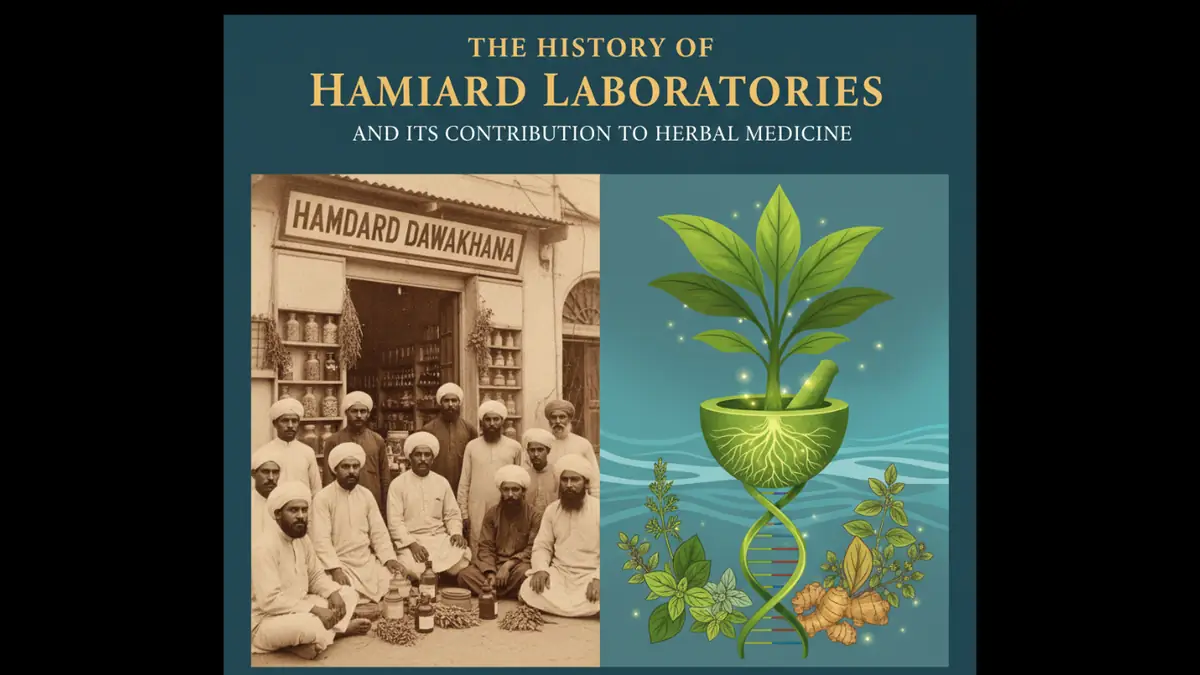
Quick answer: Hamdard started in 1906 as a small Unani clinic (dawakhana) in Old Delhi, founded by Hakeem Hafiz Abdul Majeed. His son, Hakeem Abdul Hameed, took over as a teenager and built it into Hamdard Laboratories. In 1948 the company became a waqf, a charitable trust whose profits go to education and health. Today Hamdard is one of India’s most famous makers of Unani medicines and of Rooh Afza.
Key takeaways
- “Hamdard” means “companion in pain”, or one who shares another’s suffering.
- Founded in 1906 in Delhi by Hakeem Hafiz Abdul Majeed.
- Became a waqf (non-profit trust) in 1948. The Hamdard Foundation was set up in 1964 to use profits for society.
- Hamdard helps fund Jamia Hamdard, a university in Delhi.
- Well-known products include Rooh Afza, Joshina, Roghan Badam Shirin and Majun Arad Khurma.
Hamdard is a long-established name in Unani medicine in India. To understand the system its products come from, read our guide to Unani medicine: history and principles.
Hamdard: a short timeline
Hamdard Dawakhana opens in Old Delhi
Rooh Afza is first made as a summer cooler
Teenage Hakeem Abdul Hameed takes charge after his father’s death
Becomes a waqf (charitable trust)
Hamdard Foundation set up to use profits for society
Supports Jamia Hamdard and makes hundreds of Unani products
How did Hamdard begin?
In 1906, Hakeem Hafiz Abdul Majeed opened a small Unani clinic and pharmacy in Old Delhi. He named it Hamdard, which means “companion in pain”. He made his own medicines from herbs, following classical Unani formulas. In 1907 he created Rooh Afza, a rose-and-herb syrup meant to cool the body in Delhi’s hot summers.
After his early death, his son Hakeem Abdul Hameed took over the business at about the age of 14. With his mother’s support, he moved Hamdard from a small dawakhana to large-scale, standardised manufacturing.
What makes Hamdard different from other medicine companies?
In 1948 Hamdard was turned into a waqf, a charitable trust under Islamic law. Profits are not meant for private owners. In 1964 the Hamdard Foundation was created to use the company’s profits for education, health and social welfare. Hamdard money helps fund Jamia Hamdard, a university in New Delhi known for pharmacy, medicine and Unani studies.
After the partition of India in 1947, Hakeem Abdul Hameed’s younger brother, Hakim Mohammed Said, set up Hamdard in Pakistan. A Bangladesh unit followed later. They are separate organisations that share the same roots and name.
How did Hamdard help Unani medicine?
- Standard formulas: classical Unani recipes were made in fixed, tested batches instead of by hand in small shops.
- Education: through Jamia Hamdard and related institutions, Unani and pharmacy are taught and researched.
- Wide reach: Hamdard products are sold across India and abroad, which kept Unani medicine part of daily life.
- Affordable prices: many common Unani medicines remain low-cost.
To understand the system behind these products, read our guide to Unani medicine: history and principles.
Which Hamdard products are most popular?
| Product | Type | Traditional use (as described by Hamdard) |
|---|---|---|
| Rooh Afza | Sharbat (syrup drink) | Cooling summer drink |
| Joshina | Syrup | Cough, cold and sore throat |
| Sualin | Tablet (lozenge) | Cough and throat irritation |
| Roghan Badam Shirin | Sweet almond oil | Brain tonic and dry skin, in Unani tradition |
| Majun Arad Khurma | Majun (herbal paste) | General strength and weakness |
| Safi | Syrup | Blood purifier, skin |
These are traditional uses described by the maker, not promised results. Majun is one of the most common Unani forms. Learn more in what is majun in Unani medicine.
How can you tell if a Hamdard product is genuine?
4-point genuine check
“Hamdard Laboratories (India)” with the address
Printed drug manufacturing licence
Clearly printed, not stickered over
Unbroken seal and printed MRP
Note that “Hamdard” is also used by separate companies in Pakistan and Bangladesh. Their products and formulas can differ from Indian Hamdard, so read the maker’s name. See all Hamdard products in our store, or read our guide on choosing a genuine Unani store.
Frequently asked questions
Who founded Hamdard?
Hamdard was founded in 1906 in Old Delhi by Hakeem Hafiz Abdul Majeed, a Unani physician. After his death, his son Hakeem Abdul Hameed took charge as a teenager and grew it into Hamdard Laboratories.
What does the word Hamdard mean?
Hamdard is an Urdu and Persian word meaning “companion in pain”, or someone who shares another person’s suffering. The name reflects the founder’s aim of caring for patients.
Is Hamdard a charity?
Hamdard Laboratories (India) became a waqf, a charitable trust, in 1948. The Hamdard Foundation, set up in 1964, uses the company’s profits for education, health and social welfare, including support for Jamia Hamdard university.
Are Hamdard India and Hamdard Pakistan the same company?
No. They share the same family roots, but after 1947 Hakim Mohammed Said set up Hamdard in Pakistan as a separate organisation. A Bangladesh unit also exists. Their products and formulas can differ.
When was Rooh Afza made?
Rooh Afza was first made by Hamdard in 1907 in Delhi as a cooling summer drink. It is a syrup made with rose, fruit juices and herbs, and is usually mixed with water or milk.
Are Hamdard medicines safe?
Hamdard makes licensed Unani medicines. Like any medicine, they should be used as directed, ideally on a qualified hakeem’s advice. Many are sweet, so people with diabetes should check the label. Always buy sealed packs from trusted sellers.
Sources
- Hamdard Laboratories (India), official website
- ThePrint, Hamdard’s Rooh Afza: the medicine syrup that became a household drink
- Central Council for Research in Unani Medicine (CCRUM)
Reviewed by: Dr Saleha Perveen and Dr Danish Farhan (BUMS), Safawellness. Last updated: 6 November 2026.
This article is for general information only. Product uses are traditional uses described by the maker, not medical claims. Please consult a qualified doctor before taking any medicine.


One thought on “Hamdard Laboratories: History, Founder and Popular Unani Products”